
Production flow · 4 intake steps, 4 recovery lanes, 4 build steps
How we build
Electronic scrap goes in, a tested product comes out. Equipment arrives as raw material. It is catalogued, inspected and split by part type. The recovered parts meet again at assembly, where each product is built to its bill of materials and the customer’s work order.
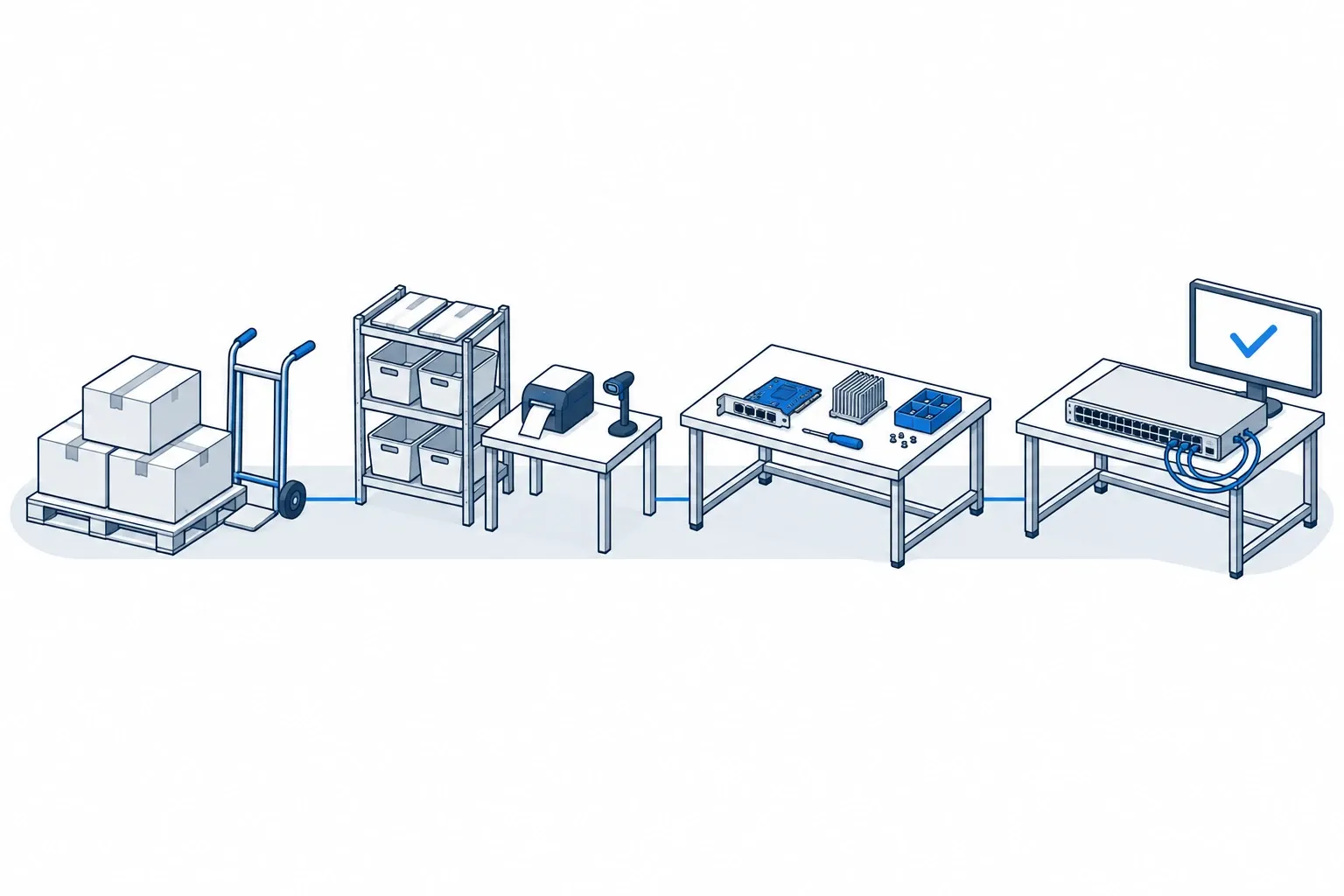
01 · In order
Intake
Equipment arrives as raw material, then is catalogued, inspected and split by part type.
Step 1 of 4
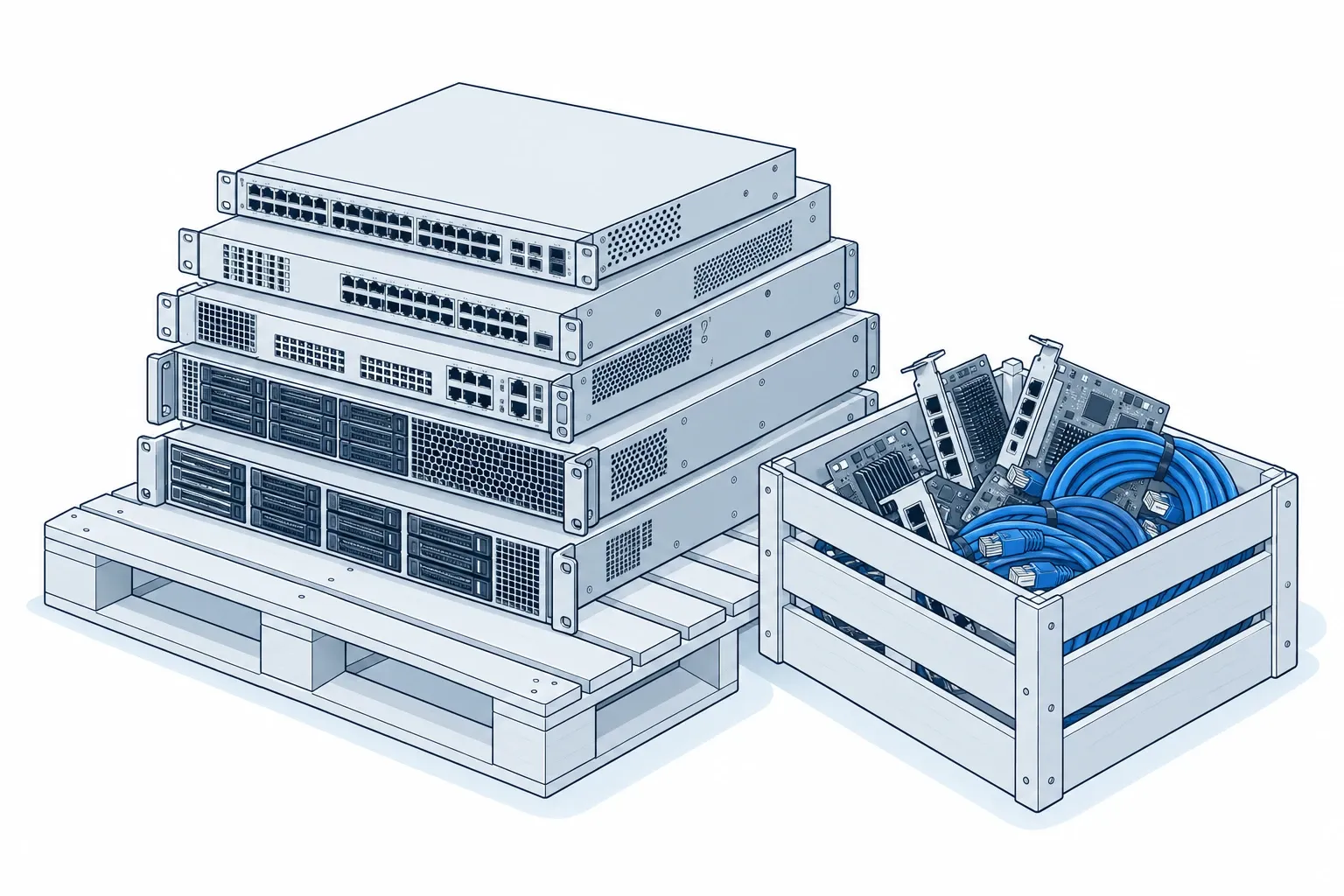
Electronic scrap
T.E.S Group buys unused and discarded electronic equipment from mid-size and large companies. Data-center hardware is often retired on a refresh schedule, while its boards, optics and chassis still have years of service left.
Step 2 of 4
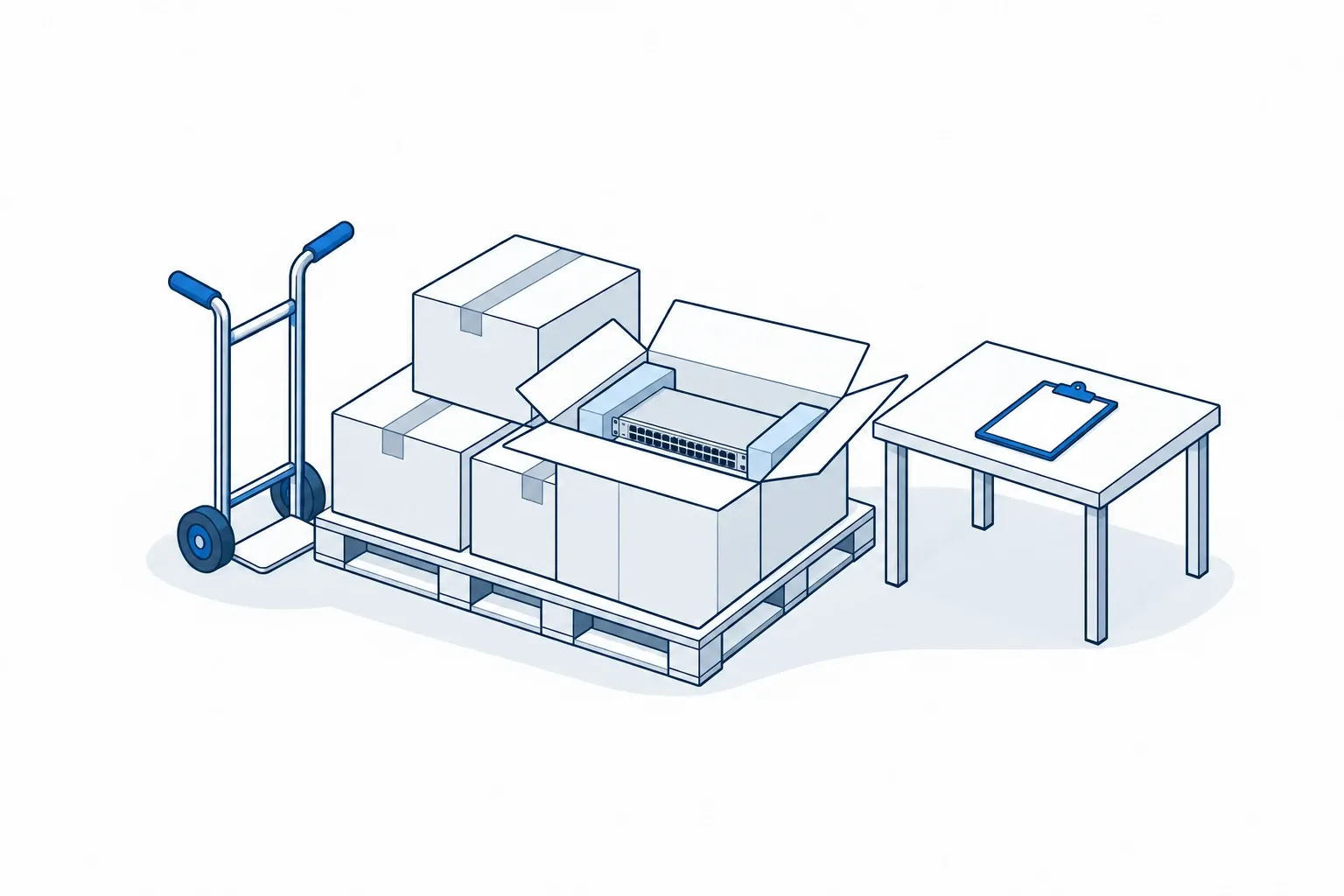
Receiving
The equipment arrives as raw material, not as stock for resale. About 95% of our raw material, by our estimate more, is end-of-life electronics.
Step 3 of 4
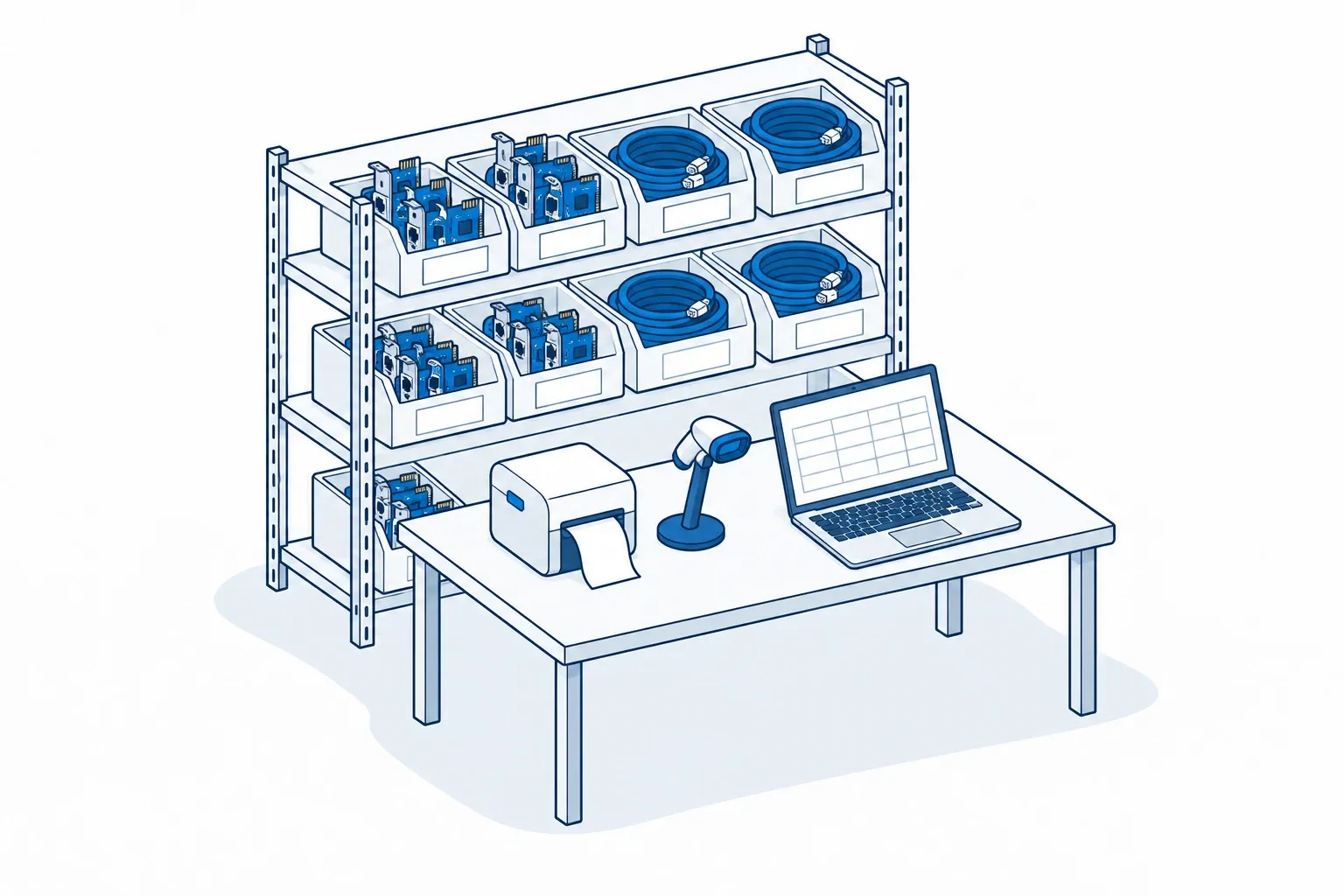
Sort and catalogue
Each item is identified and recorded in inventory, against years of part numbers, firmware versions, airflow variants and repair records in our database.
Step 4 of 4
Inspection
Each item is checked for damage, then split by part type into the four recovery lanes: boards and cards, chassis, power supplies and fans, and cables.
02 · Four lanes, side by side
Recovery
Each part type has its own lane. A working component goes back to work.
Lane
Boards and cards
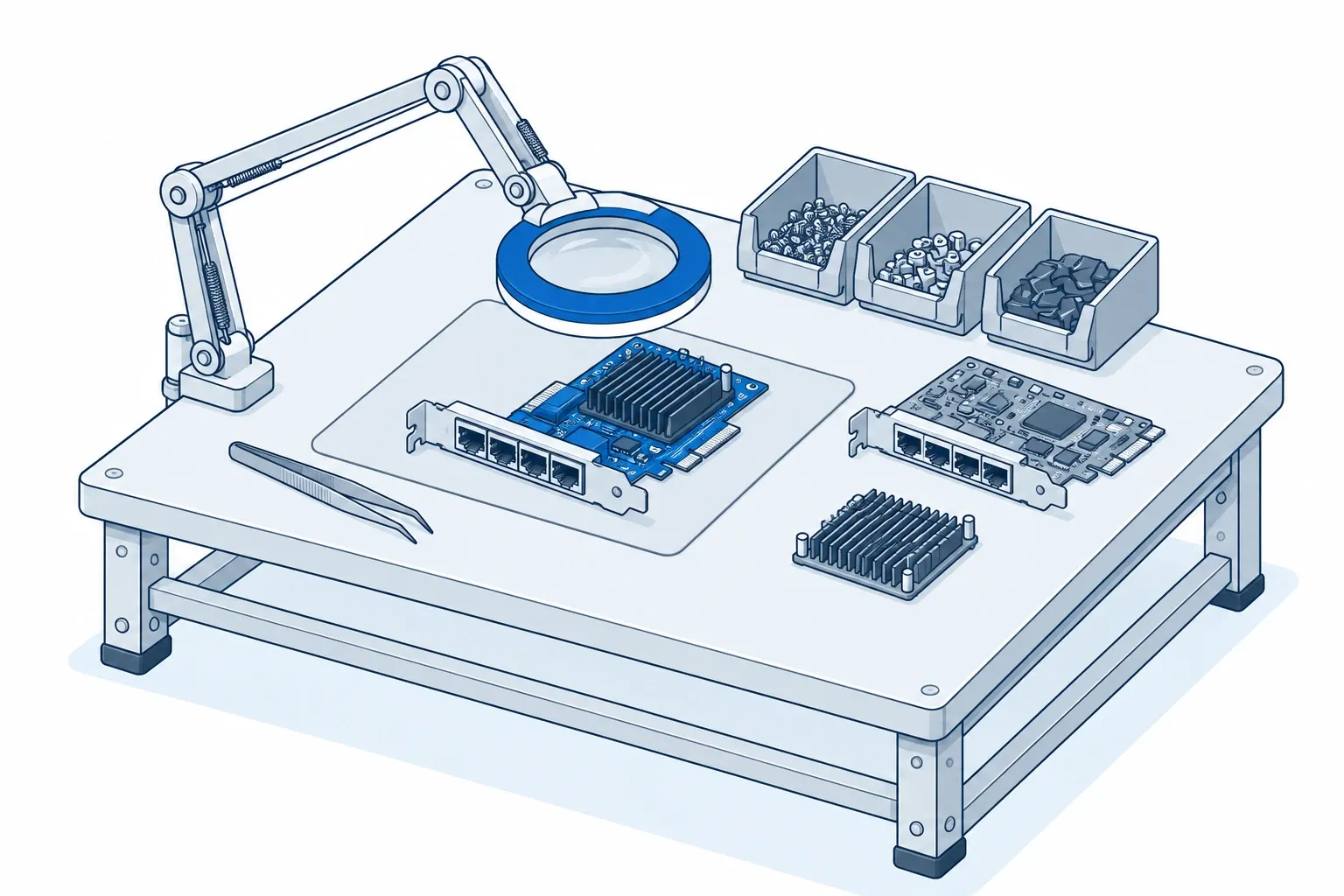
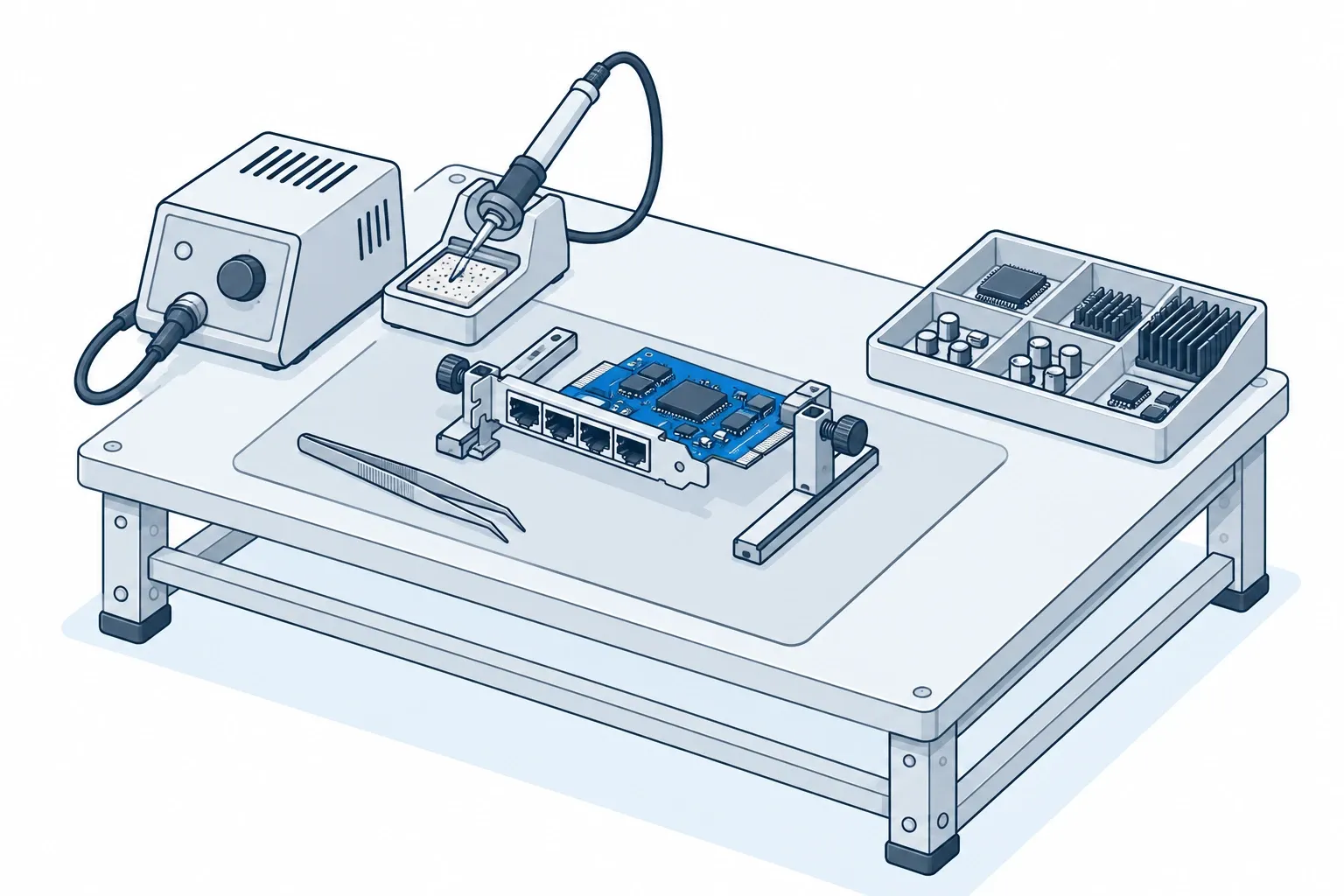
Cards pulled from end-of-life equipment are repaired and rebuilt. A card that cannot be repaired is not recycled: its working components become raw material for other cards. Motherboards, CPUs and memory for switches are recovered too.
Lane
Chassis
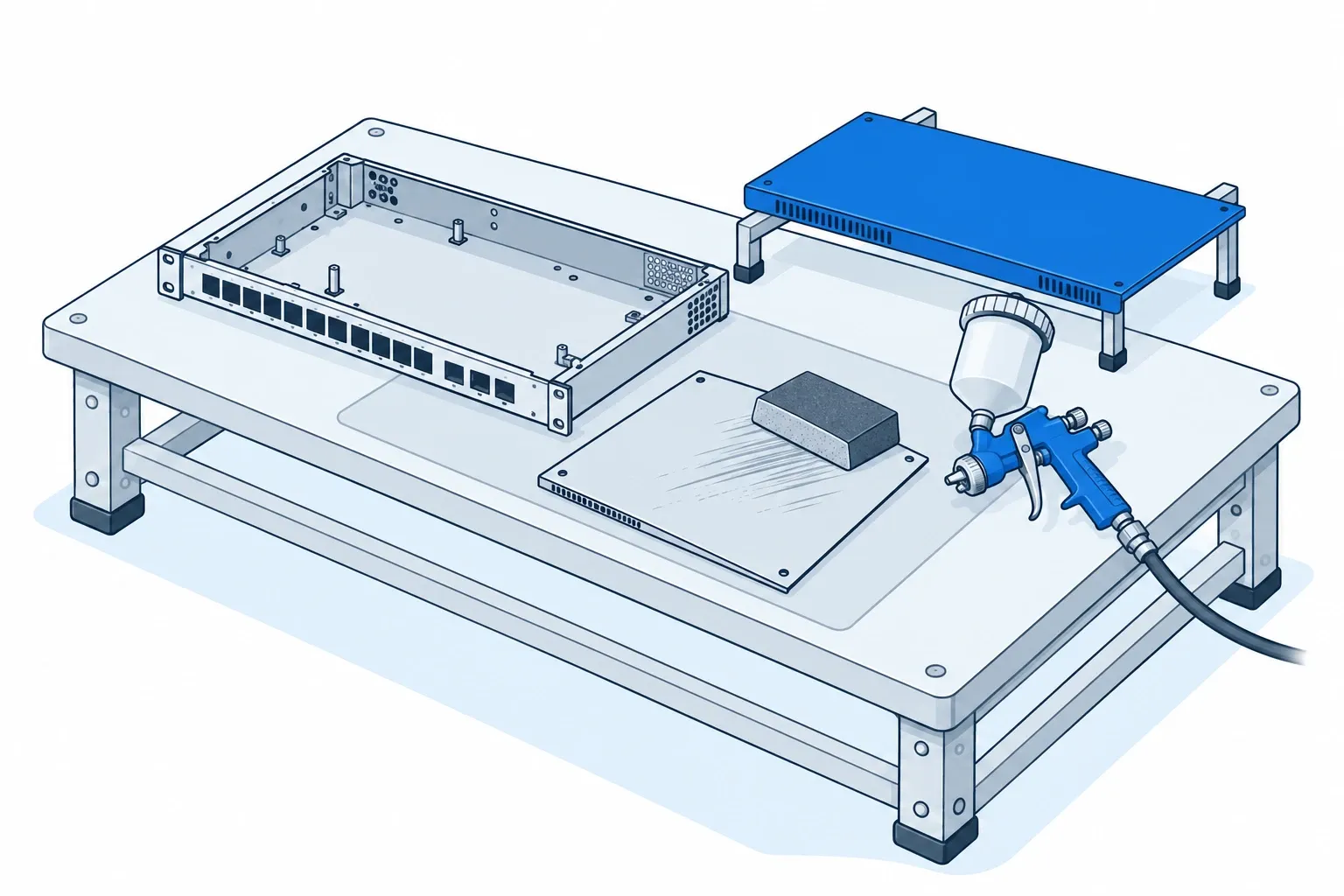
Chassis from scrapped switches are metal-worked, finished and repainted, ready to take a new build.
Lane
Power supplies and fans
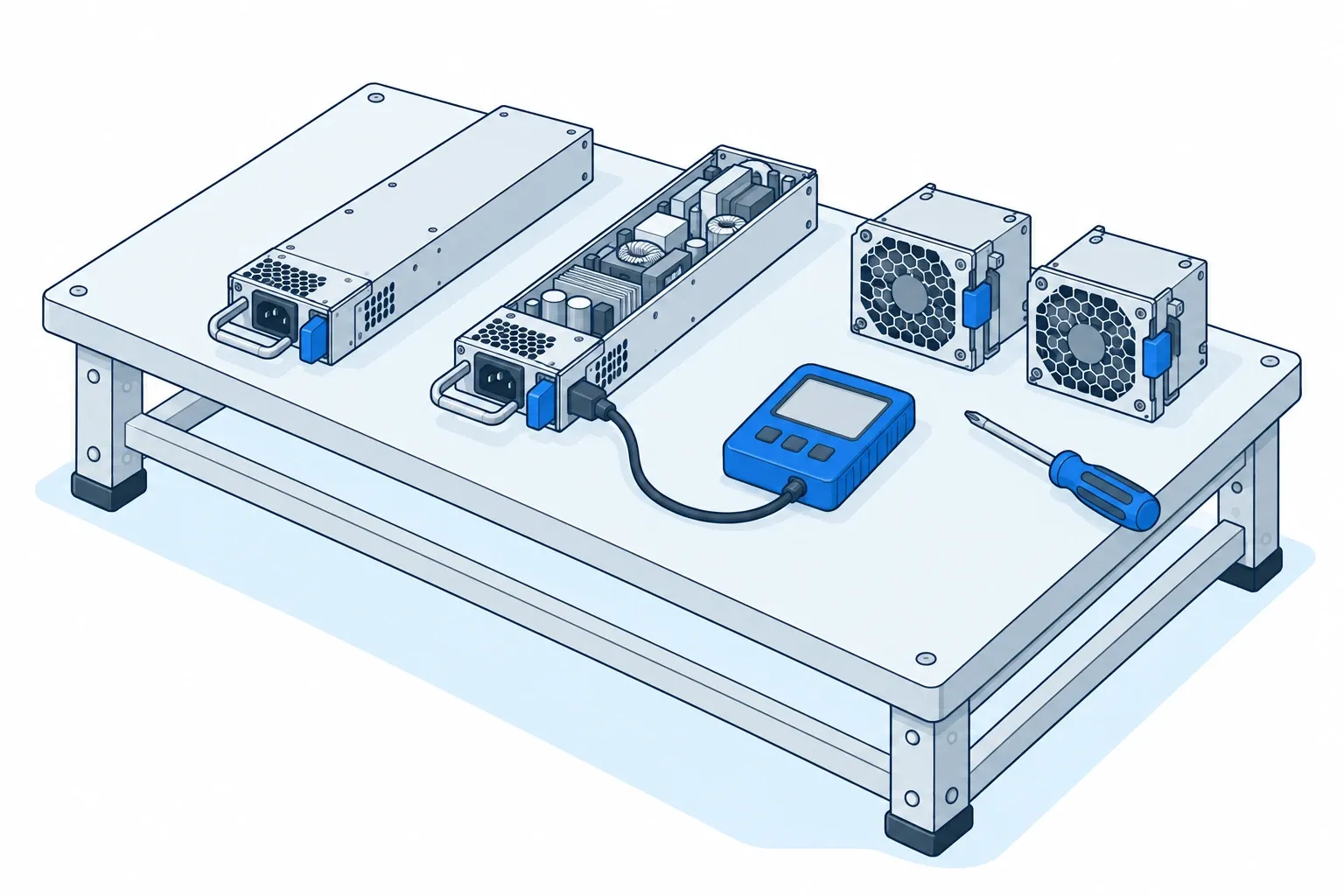
Power supplies and fans are refurbished and remanufactured, so each switch can be fitted with the power and the airflow its work order calls for.
Lane
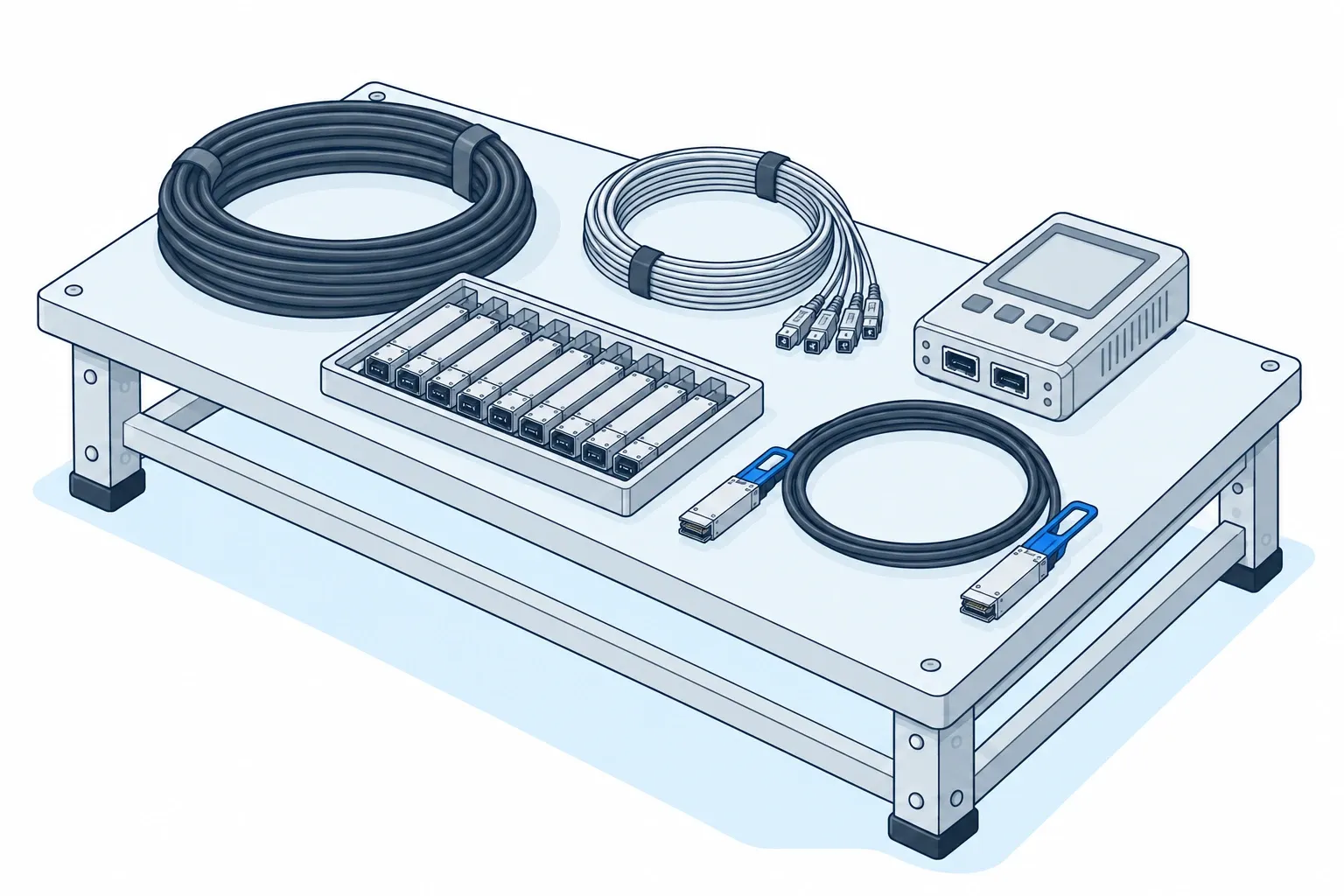
Cables
Cable and connectors (SFP, QSFP, QSFP56, QSFP112) are recovered from cable sent for recycling, for copper and fiber, active and passive cables.
03 · In order, per work order
Build
The recovered parts meet again at assembly, where each product is built to its bill of materials and the customer’s work order.
Step 1 of 4
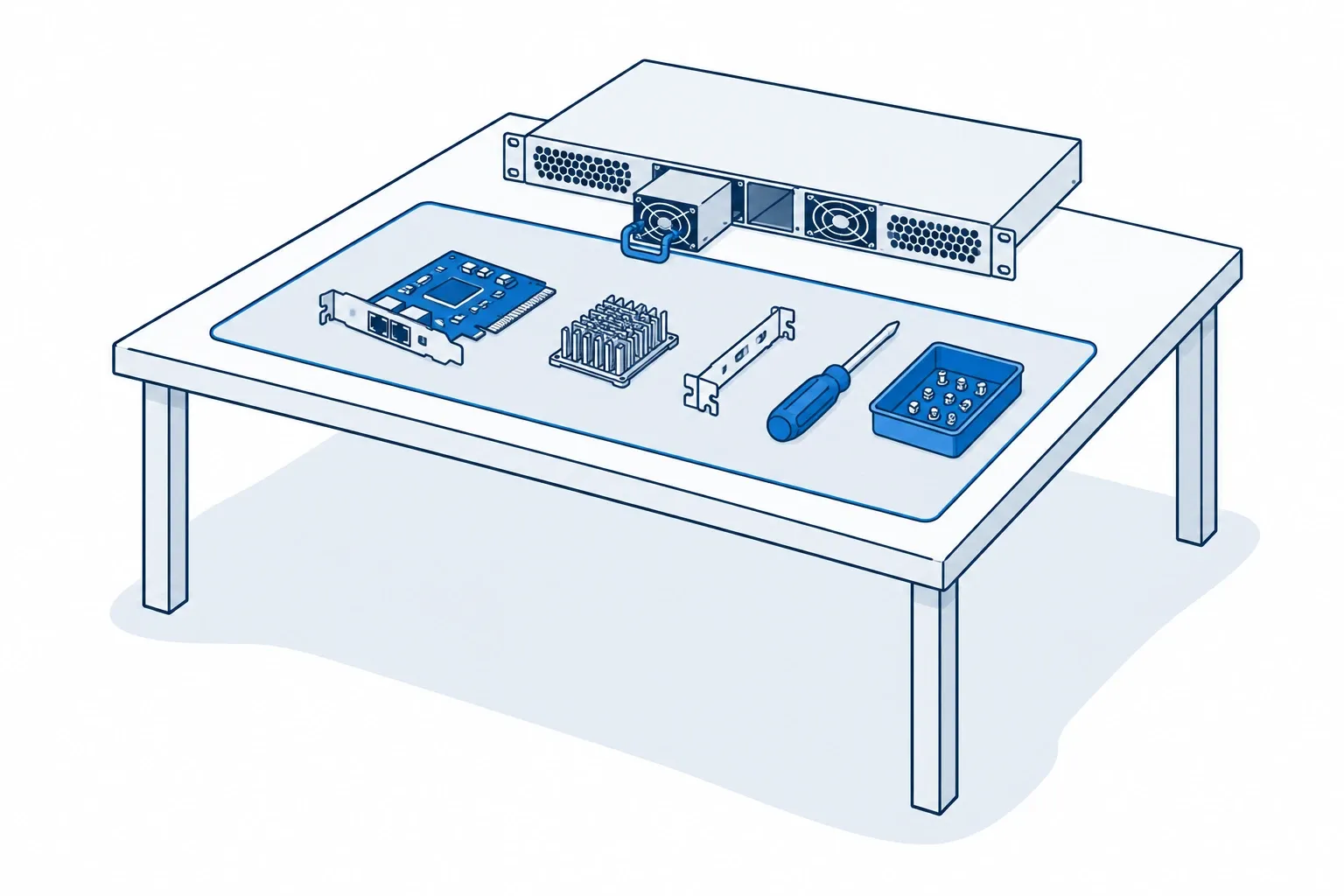
Assembly
Each product is built to its bill of materials and the customer’s work order. A switch is configured per order: airflow direction, power supplies and fans.
Step 2 of 4
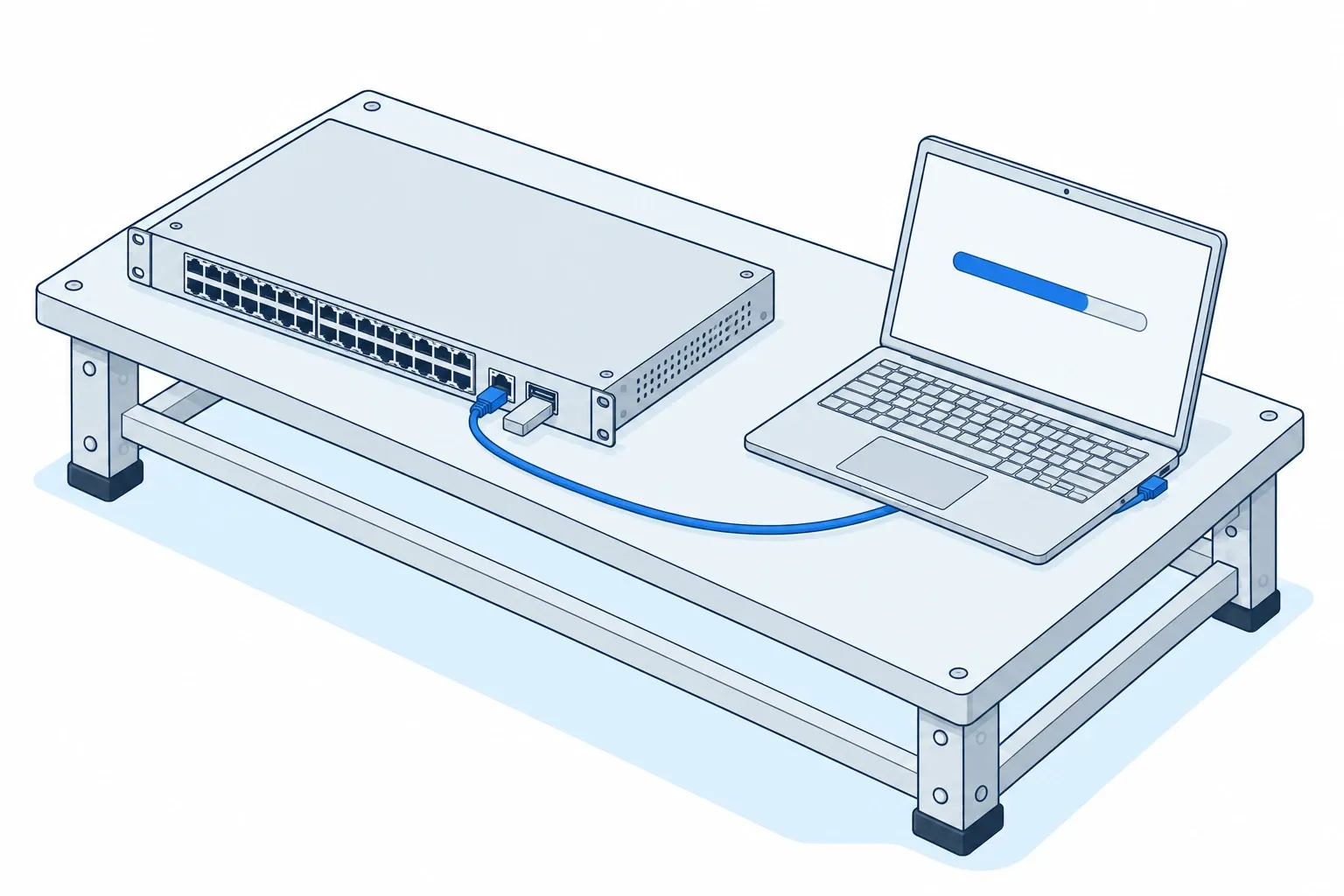
Firmware and OS
The compatible firmware and the right operating system are loaded. We work them out from our database, with AI tools and large language models on top of that data.
Step 3 of 4
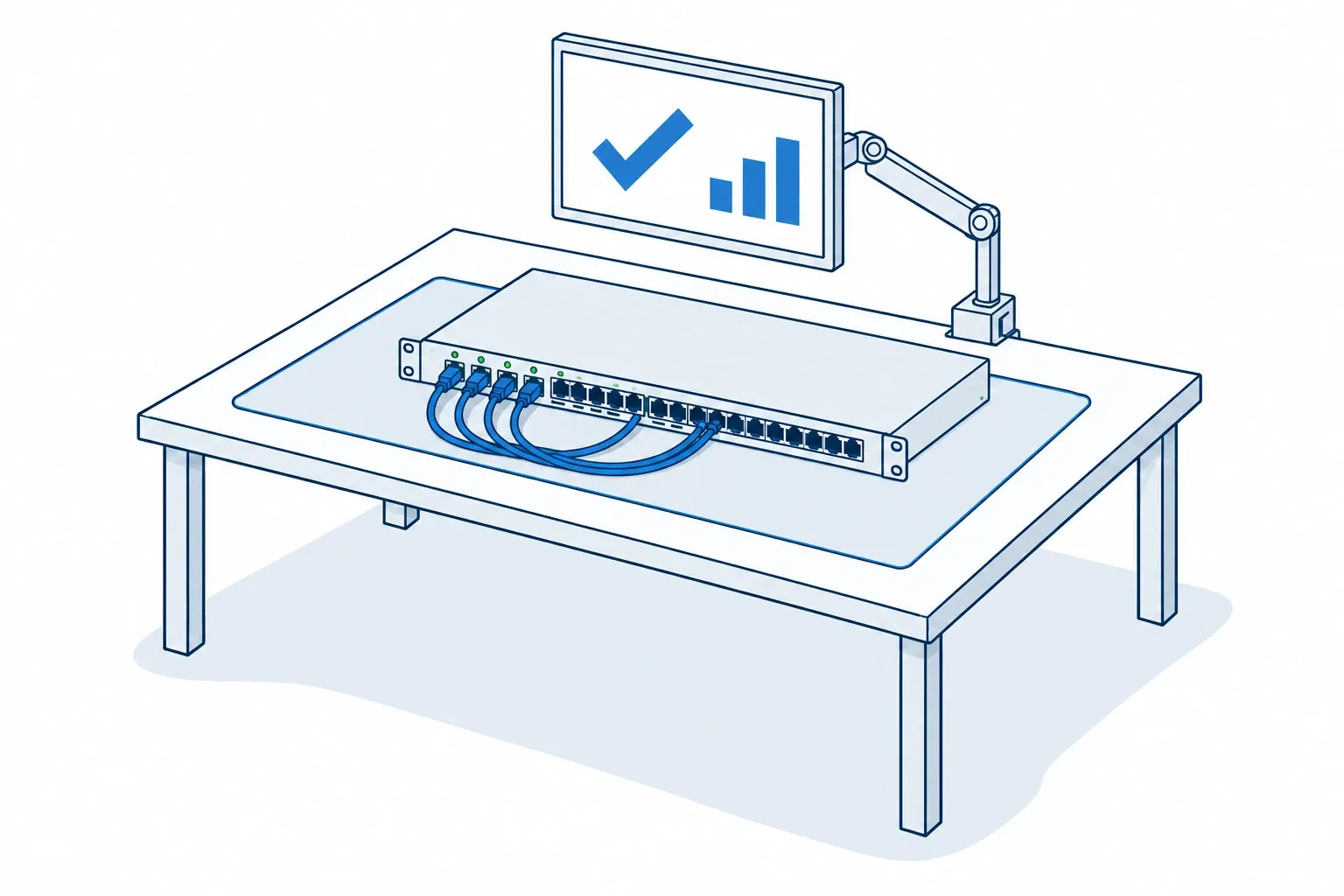
Final test
Every unit is tested before shipment.
- Link establishment and port-by-port traffic validation
- Power-supply and fan diagnostics
- Firmware confirmation
- Airflow direction checked and recorded
- Full cosmetic inspection
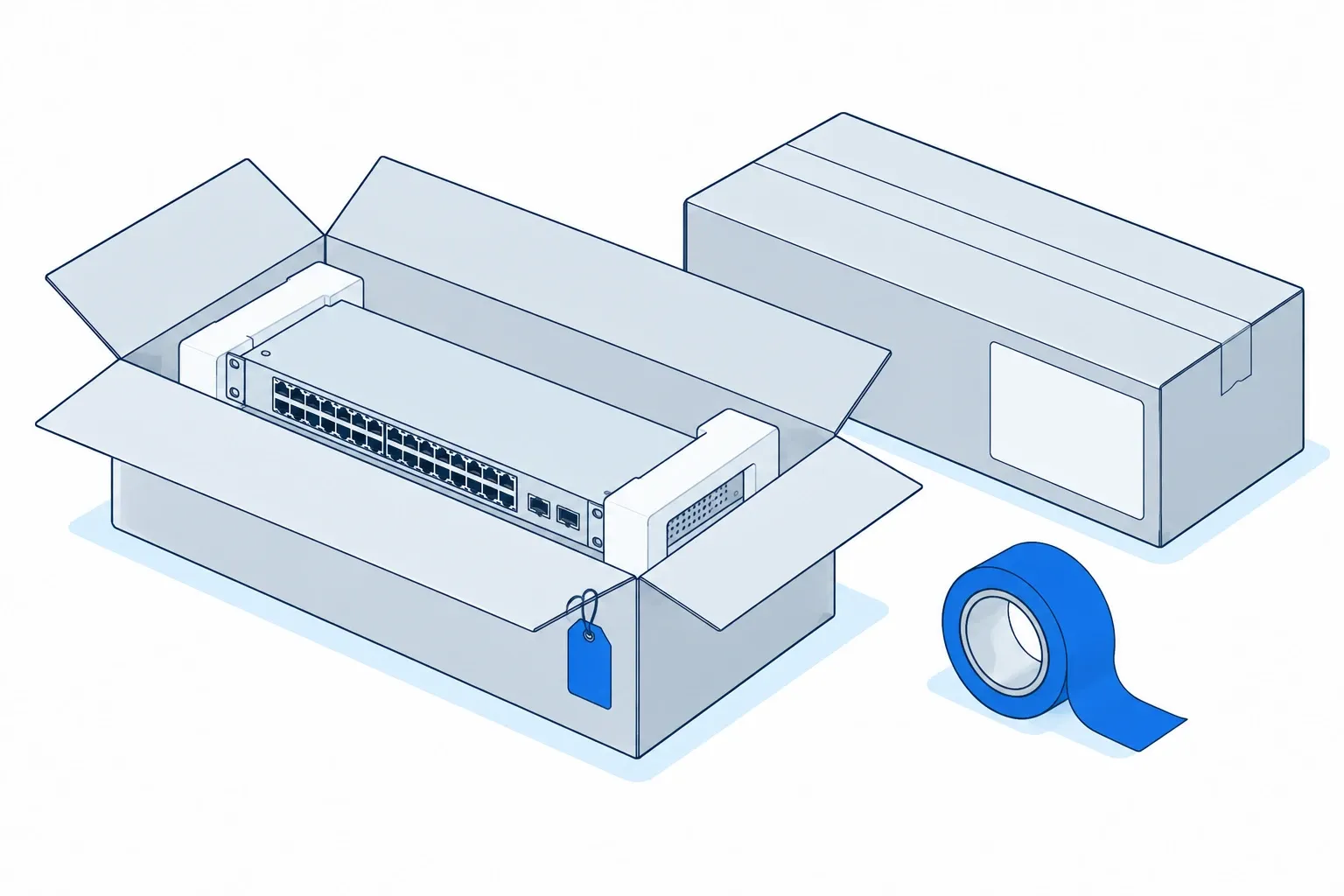
Step 4 of 4
Tested product
A switch, adapter card or cable, built to the specification in the work order and shipped to customers worldwide.
Low-tech hands, high-tech knowledge
The bench work is deliberately low-tech: inspection, soldering, metalwork, paint and assembly. The knowledge behind it is not.
Years of part numbers, firmware versions, airflow variants and repair records sit in our database. Our team works with AI tools and large language models on top of that data. With them we can work out how to rebuild almost any end-of-life item: the correct airflow, the compatible firmware, the right operating system.
That combination is our edge: hands-on manufacturing, guided by data and AI.
Every order, the same discipline
- A bill of materialsEach product is built to its own list of recovered parts and the customer’s work order.
- A station-by-station buildIntake, recovery and build, in the order shown on this page.
- A final test before shipmentEvery unit, before it leaves.
What comes out
Three product lines
Every common speed from 10Gb/s upward: 10, 25, 40, 56, 100, 200 and 400Gb/s, and 800Gb/s for cables.
| Product | Speeds | What we build | Recovered inputs |
|---|---|---|---|
| Switches | 10–400Gb/s | Ethernet and InfiniBand switches, configured per order: airflow direction, power supplies, fans, firmware and operating system. | Chassis from scrapped switches, metal-worked, finished and repainted. Refurbished power supplies and fans. Recovered motherboards, CPUs and memory. |
| Adapter cards | 10–400Gb/s | Network adapter cards, repaired, rebuilt and tested. | Cards pulled from end-of-life equipment. Working components harvested from cards that are beyond repair. |
| Cables | 10–800Gb/s | Copper and fiber, active and passive, Ethernet and InfiniBand. | Cable and connectors (SFP, QSFP, QSFP56, QSFP112) recovered from cable sent for recycling. |